How I Learned to Trust Myself Through Discomfort
I hate being cold.
And yet somehow, over the past few months, I’ve become someone who willingly walks into the sea in winter.
If you’ve ever stood at the edge of cold water, you’ll know the moment I mean. The wind on your skin. The hesitation. The quiet negotiation happening in your mind as you look at the water and wonder what on earth you’re even doing.
Your body is very clear about it.
No.
Nope.
No thank you. Absolutely not.
Cold water triggers a primal response. Your breath catches, your heart rate jumps, and every instinct in your system tells you to get out.
And yet, when I step into the water, something interesting happens.
Yes, my body activates. But as I focus on my exhale, my breath slows. My shoulders soften. And somewhere in that moment my nervous system realises something surprising.
This is intense.
But it’s safe.
Over the past few months of sea dipping with friends here in Margate, I’ve started to realise something about that moment. Cold water creates a very unusual experience for the body. It triggers a stress response, but within a container of safety.
And that means something modern life rarely gives us the chance to do.
Finish the stress cycle.
Activation. Breathing. Settling.
The body learns that it can move through intensity and come back to calm.
And slowly, something else begins to grow alongside that practice.
Trust.
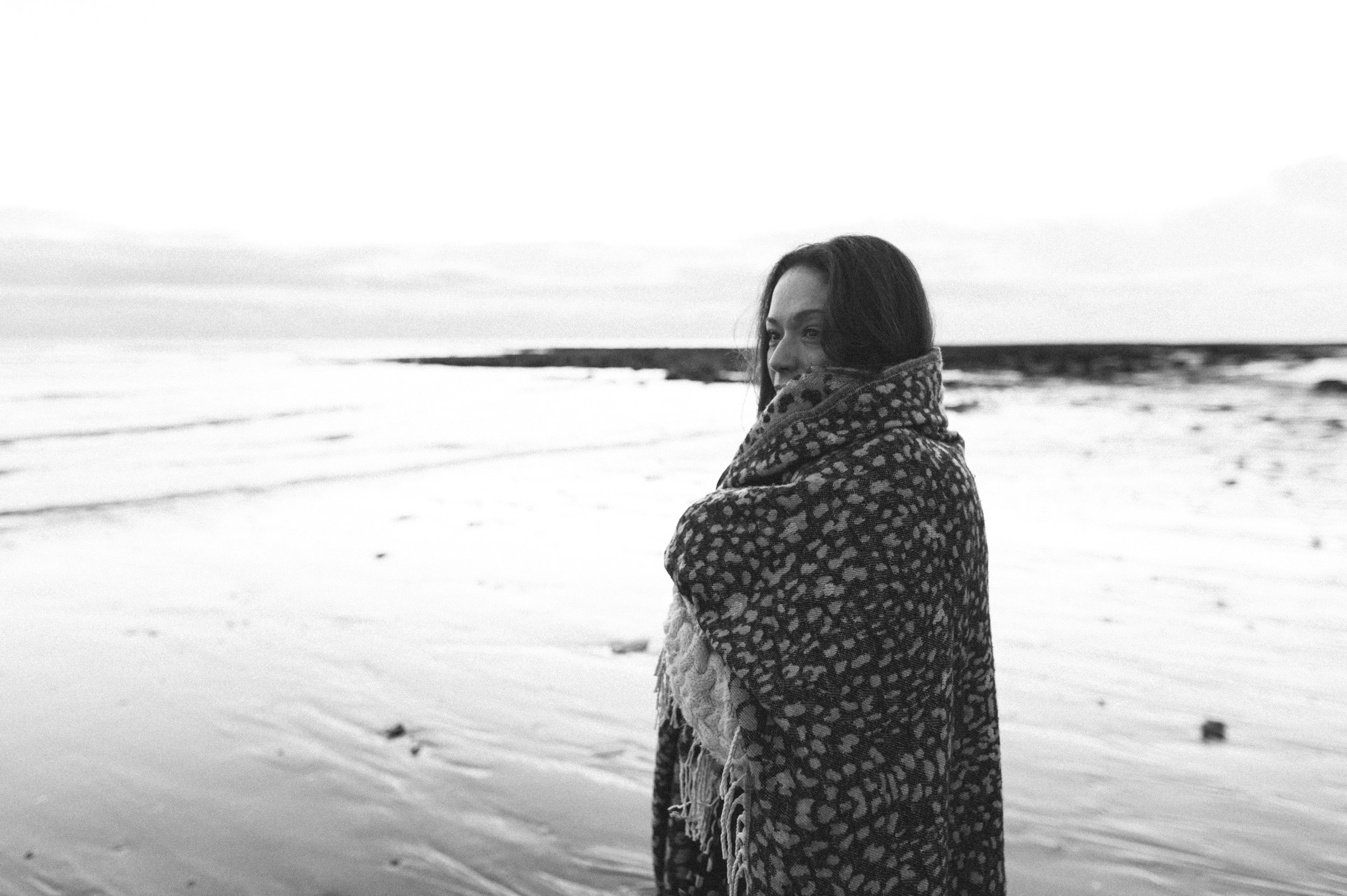
I find myself giddy in the water, laughing as I flap about trying to find my rhythm to swim. We’re all laughing — “we’re mad!” — and if the sun is out, even on a cold winter’s day, I sometimes close my eyes and feel the warmth of the light on my face.
It feels childlike. Playful.
Something we rarely grant ourselves in adult life.
When I’m in the water, I can only think about my sit bones and collar bones aching, the sting in my thighs. Everything else evaporates.
Some mornings I wake up anxious, already buzzing with energy I know my body doesn’t need more of. A run would only push the activation further. Instead, I walk to the beach.
I hesitate, noticing my breath is already shallow, and begin slowing it down.
I know better now what my body needs.
There are days when I need to nap an hour after a swim. I’m warm, I’m fed, and my body feels deeply calm — the complete opposite of the extreme activation of the anxiety beforehand and the cold intensity of the dip itself.
Afterwards comes a quiet, blissful calm.
My mood lifts.
My energy settles into something steadier and more useful.
Activation → release → recovery.
For years I lived with anxiety, depression, chronic pain, and panic attacks in the night. It was no wonder I struggled to sleep.
In my waking hours I was single, living in London, working in what many people would consider my dream career. On paper, everything looked good.
But inside my body it felt very different.
I’d get flare-ups of gastric pain, nights of broken, tear-soaked sleep, and the persistent belief that I simply didn’t handle stress very well.
I kept a lot hidden — or at least I thought I did.
But like a black cloud hanging over me, those suppressed feelings and symptoms showed up anyway. They surfaced as moodiness, impatience, and a body that seemed to radiate stress even when I thought I was containing it.
It impacted my relationships, especially at work, and only added to the pressure I was already carrying.
There were days I called in sick with crippling stomach pain, my face swollen from crying, exhausted from nights spent staring at the ceiling or screaming into my pillow.
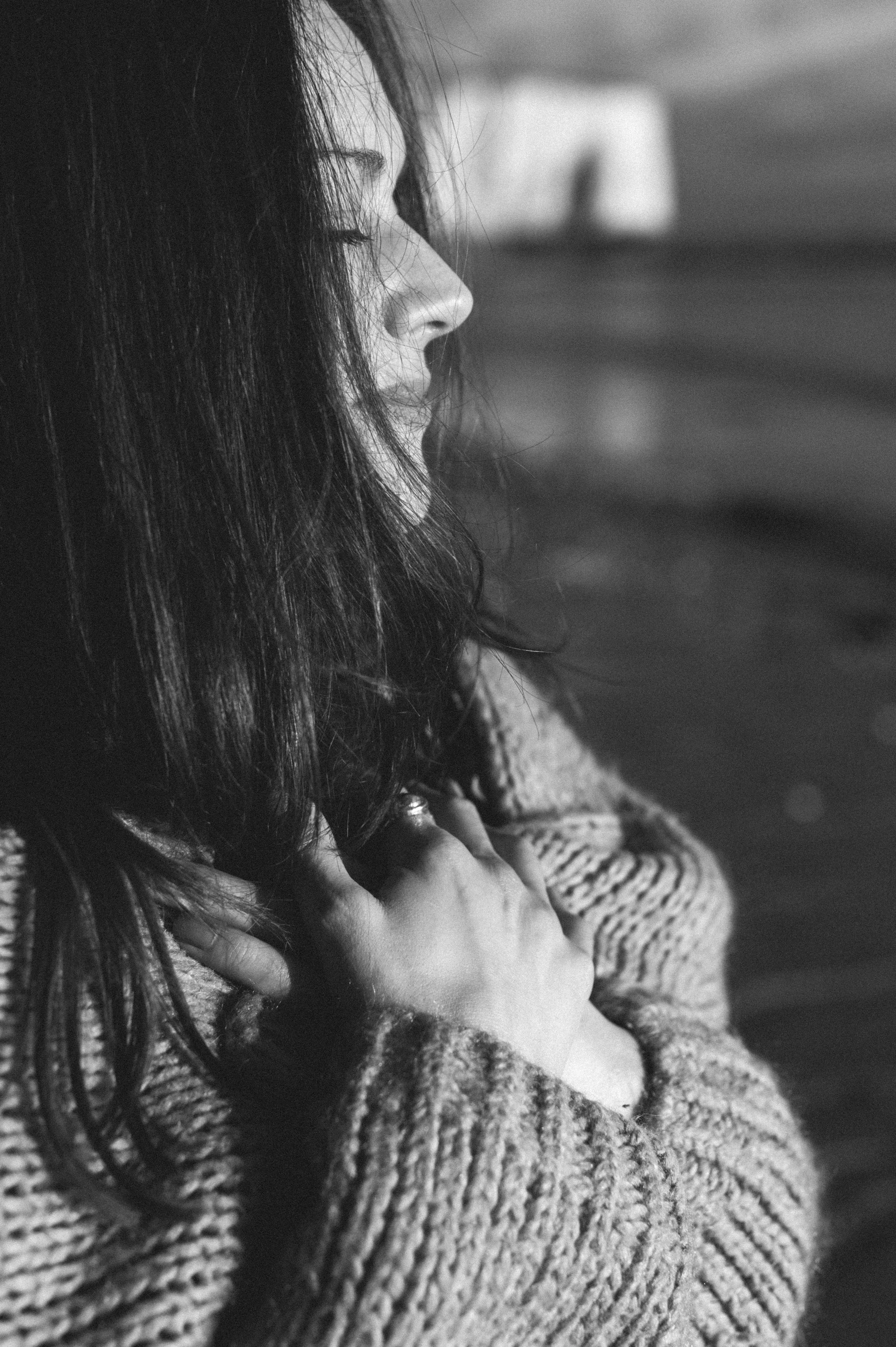
It’s hard to even think of myself that way now.
Over time I started to realise something important.
My body had been sending signals all along.
I just hadn’t learned how to listen yet.
Have you ever felt disconnected from yourself in this way?
Like your mind and body are operating on separate planes, with thoughts racing at warp speed while your physical being lags behind?
In our fast-paced lives, it’s surprisingly easy to become detached from the present moment — from what our bodies are actually experiencing.
I wasn’t happy.
My job was good. I had simply outgrown it, or perhaps realised the structure and pace weren’t a good fit for the person I was becoming.
But at the time I couldn’t see that clearly.
Instead I felt constantly anxious. Worrying about getting things wrong. Being too much. Not being good enough.
I had stopped trusting myself.
And when you stop trusting yourself, it becomes very difficult to trust your body too.
In many ways, that moment at the edge of the water feels familiar.
My body hesitates. My mind tries to negotiate.
But somewhere underneath it all, there’s a quiet knowing.
Without sounding like a cliché, it was yoga — or perhaps more accurately the slower pace of the practice — that helped me begin to develop the listening skills I’d been missing.
For the first time, I started noticing the subtle signals of my body.
The breath.
Muscle tension.
Energy rising and falling.
Your brain is constantly listening to your body — monitoring heart rate, breathing patterns, muscle tension and countless other signals we rarely think about consciously.
Our thoughts affect our bodies, and our bodies affect our thoughts.
It’s a constant feedback loop.
Modern life demands so much attention, and where our attention goes our energy flows. The trouble is that too often that energy is activation.
But activation itself isn’t the problem.
The problem is that we rarely allow the cycle to complete.
Unread emails flagged as urgent.
A presentation to the board.
A meeting about finances.
A difficult conversation with a friend.
These everyday situations wake us up — and not gently.
We become alert, hypervigilant, analysing every word and moment. We hold our breath. We clench. We shield. We react and try to get away from the experience as quickly as possible.
But the body is still holding the feeling.

Stress — Activation
Reaction — Extraction
Response — Regulation
This last piece is often missing.
We don’t close the loop.
Somewhere along the way, we lost touch with our natural instincts, and our capacity to process stress began to shrink.
We often know what we need to recover or heal, but we dismiss those things — believing they’re too simple, or not productive or impressive enough to prioritise.
But our ability to release — to shake, to move, to cry, to scream it out (that’s an exhale) — is far more innate than we realise.
Instead, we push things down.
We tell ourselves we’ll deal with it later.
We avoid it, minimise it, move on.
But where does it go?
It doesn’t disappear.
It stays in the body — tucked away, buried, held.
And this is why practices like sea dipping, breathwork, or even a walk in wild weather can feel so powerful.
They give the body a way to finally complete what was left unfinished.
Over time, I found myself returning to a few simple anchors — ways to come back to my body when things felt overwhelming.
Eventually, these became something I now share through my work as the Big Love RESET Framework™.
The Big Love RESET Framework
R.E.S.E.T.
R — Recognise
Notice the early signs.
Body before story.
What’s happening in me right now?
E — Exhale
Slow the breath.
Soften the jaw.
Lengthen the body.
Regulate before you respond.
S — Soften
Lower your tone.
Slow your movements.
Unclench your hands.
Safety is communicated physically.
E — Empathise
Name what’s happening.
“This feels big.”
“I can see you’re overwhelmed.”
Co-regulation begins here.
T — Tend
Choose the next small supportive action.
Water. Movement. A pause. A boundary. A reset conversation.
It’s not about getting it perfect.
It’s about having something to return to — especially in the moments your body would usually try to rush past.
Looking back, I’ve realised something about many of the biggest decisions in my life.
They rarely arrived fully formed in my mind.
They began as a feeling in my body.
Leaving school early.
Applying to art college.
Leaving my career.
Starting Big Love.
Each time, there was a quiet nudge first.
A sense that something wasn’t quite right anymore.
A growing feeling that change was needed, even if I didn’t yet know what that change would look like.
Those nudges eventually became louder and impossible to ignore.
My body often knew something before my brain had a plan.
I remember taking myself on a three-day break to Tenerife — no apps, my phone on Do Not Disturb, just my yoga anatomy workbooks, a journal, and a couple of books. I can’t remember whether it was The Multi-Hyphen Method by Emma Gannon or You Are a Badass by Jen Sincero that pushed the idea over the line, but both played a role.
Somewhere between journalling, reading and staring out at the sea, I decided to write my resignation letter.
I set a date in my diary.
I can still recall it — and even sense it now in my body.
That feeling of activation.
Excitement tangled with fear.
A surge of energy, of movement… motion towards something that felt possible, even though I couldn’t fully see it yet.
That floaty spark of inspiration, shifting into something more grounded.
More certain.
A quiet flicker of self-belief.
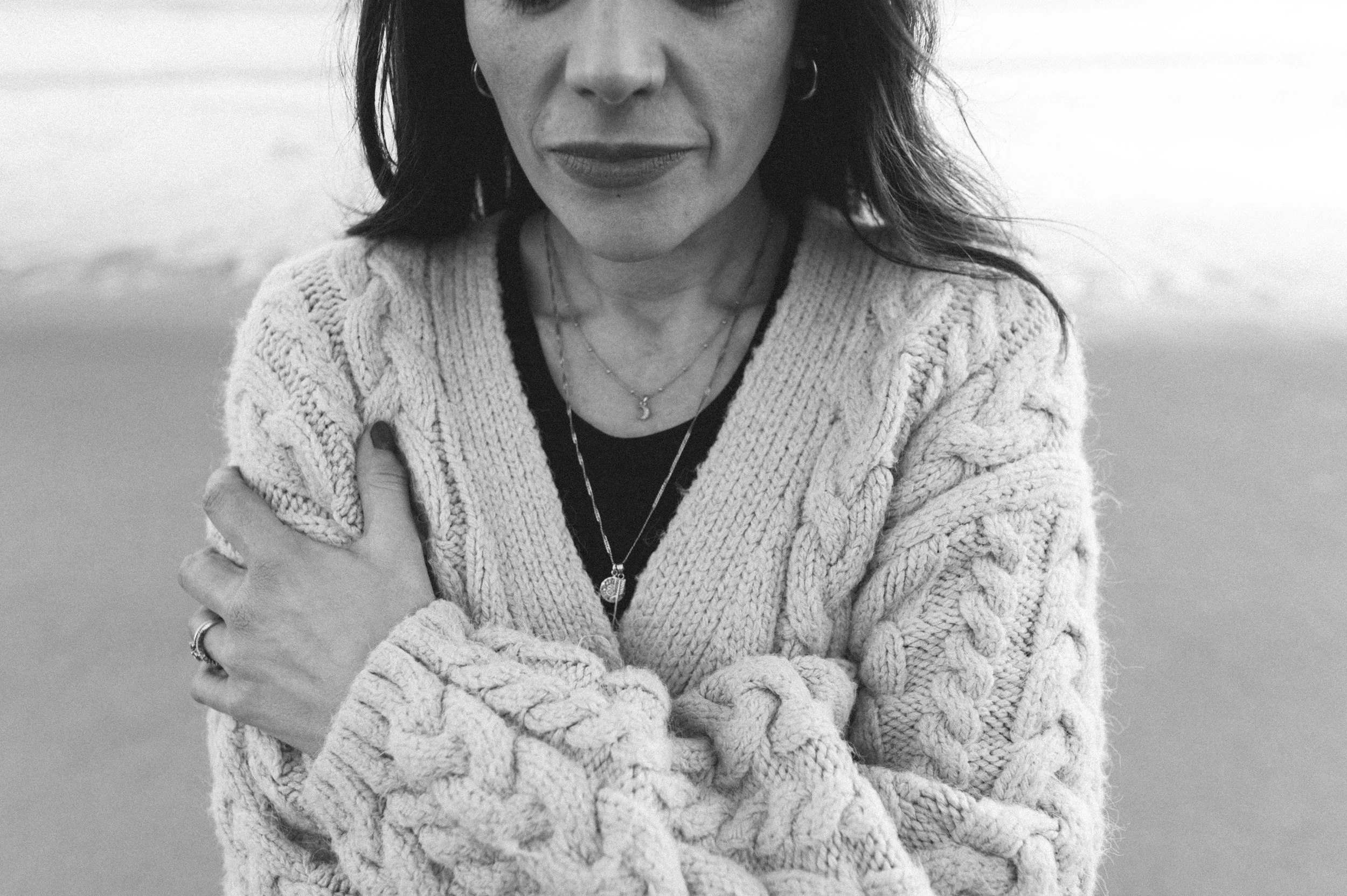
This is the same principle behind many of the practices I now share through Big Love — breathwork, gentle movement, time in nature.
Small ways of helping the body experience activation and safety at the same time.
Because when the body learns that intensity can exist alongside safety, something powerful happens.
We begin to rebuild trust in ourselves.
Life isn’t comfortable. It has sharp edges, and we often feel frayed at ours.
I’m not dismissing the hardest, darkest moments in life. In truth, I can’t be sure I’d be where I am today if I hadn’t lived through them.
What I have realised is that we can intentionally create moments of safe discomfort in our lives.
Cold water dips.
Attending an event alone.
Trying something new with people you don’t know yet.
Even nature can be uncomfortable — the howling wind, the icy cold running down the back of your neck, the hammering rain soaking you through.
Running your first 5k can feel deeply unfamiliar and offer zero comfort at all.
But we join a running group.
We create a plan.
We tell our friends for support.
We build containers that help us stay with the discomfort instead of avoiding it.
Courage, I’ve realised, isn’t about overriding fear.
It’s about learning how to stay with yourself while fear is present.
I don’t know if it’s nature, but so many of these decisions seem to arrive when I’m outside.
By a pool in the shade of palm trees.
Under a tree.
At the water’s edge.
In icy cold water.
There’s a clarity that comes with being outside.
A chance to process, to reflect, to pause.
It’s like closing down the endless tabs running in the background of your mind.
Tuning out the static of modern life.
And in that space — the gap between the doing — something shifts.
A thought becomes an idea.
A maybe becomes a possibility.
Often because you’ve already done something different.
You’ve stepped outside the norm.
Taken a break.
Entered the unknown.
And suddenly… the unknown doesn’t feel so unfamiliar anymore.
If this resonated, and you’re wanting more ways to practise staying with yourself through discomfort — gently, and with support — there are a few ways to come closer.
You can join us inside the Big Love Membership, where we explore breath, movement, rest and nervous system support in simple, everyday ways. It's a space for real-life humans navigating real-life challenges, with practical tools and a supportive community to return to.
And if you're ready to step outside your comfort zone in a different way, I'd love for you to join us for our upcoming collaboration with Girl Hike CIC.
This summer, we'll be gathering for an evening hike, moments of pause and reflection, and a sea dip at sunset. It's exactly the kind of experience this blog speaks to — not about being fearless, but about discovering what becomes possible when you trust yourself enough to take the next step.
Whether that's joining us online, meeting us on the trail, or simply taking one small brave step of your own this week, start wherever feels like a gentle yes.
Big love,
Becki